![[personal profile]](https://www.dreamwidth.org/img/silk/identity/user.png) jazzy_dave
jazzy_davePeter Ackroyd "The Clerkenwell Tales" (Vintage)
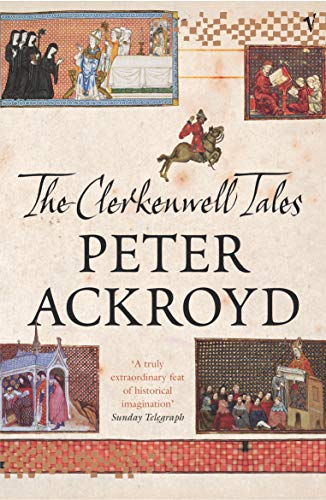
The Clerkenwell Tales is a historical novel set in London in 1399. It is a time of great unease in the land under Richard II, but threatened by Henry Bolingbroke who did finally usurp the throne and became Henry IV. He had Richard murdered or starved to death in 1400. The novel, based on the structure of Chaucer's Canterbury Tales, tells the story of a group of heretics, known as the predestined men, who were manipulated by a more powerful group bent upon the removal of Richard II, and who sought to sow disorder and chaos to undermine the credibility of Richard's rule. The predestined men, also known as Lollards, thought they were fighting against the official church and its beliefs, but in this case, they were being used.
Lollardy (or Lollardry) was the political and religious movement of the Lollards from the late 14th century to early in the time of the English Reformation. Lollardy followed from the teaching of John Wyclif, a prominent theologian at Oxford, beginning in the 1350s. Its demands were primarily for reform of the Catholic Church. It taught that piety was a requirement for a priest to be a "true" priest or to perform the sacraments and that a pious layman had the power to perform those same rites, believing that religious power and authority came through piety and not through the Church hierarchy. Similarly, Lollardy emphasized the authority of the Scriptures over the authority of priests. It taught the concept of the "Church of the Saved", meaning that Christ's true church was the community of the faithful, which overlapped with but was not the same as the official Church of Rome. It taught a form of predestination. It advocated apostolic poverty and taxation of Church properties. It also denied transubstantiation in favour of consubstantiation. It is not difficult to see why the official Church would take umbrage and fight against such "heretical" beliefs.
The Lollard philosophy also echoes that of the Gospel of Thomas. In the novel, Ackroyd has one of the characters refer to "the good doctor Thomas", who, "tells us that the soul has a faculty of its own for apprehending the true and that it may reach towards God with will and understanding".
The story is well told with a wide cast of characters. Ackroyd knows London well in all of its periods, and he captures the sights and sounds and smells (particularly the smells) of medieval London, plus the intrigues, the superstitions, and the mores of a community and a time when lives were nasty, brutish, and short. And he does it with the vocabulary of the day! I also learned that ancient London was riven with various streams and rivers that fed into the Thames, the courses of which today follow a number of streets. The river Fleet, for example, figures prominently in the story.
The Clerkenwell Tales is a historical novel set in London in 1399. It is a time of great unease in the land under Richard II, but threatened by Henry Bolingbroke who did finally usurp the throne and became Henry IV. He had Richard murdered or starved to death in 1400. The novel, based on the structure of Chaucer's Canterbury Tales, tells the story of a group of heretics, known as the predestined men, who were manipulated by a more powerful group bent upon the removal of Richard II, and who sought to sow disorder and chaos to undermine the credibility of Richard's rule. The predestined men, also known as Lollards, thought they were fighting against the official church and its beliefs, but in this case, they were being used.
Lollardy (or Lollardry) was the political and religious movement of the Lollards from the late 14th century to early in the time of the English Reformation. Lollardy followed from the teaching of John Wyclif, a prominent theologian at Oxford, beginning in the 1350s. Its demands were primarily for reform of the Catholic Church. It taught that piety was a requirement for a priest to be a "true" priest or to perform the sacraments and that a pious layman had the power to perform those same rites, believing that religious power and authority came through piety and not through the Church hierarchy. Similarly, Lollardy emphasized the authority of the Scriptures over the authority of priests. It taught the concept of the "Church of the Saved", meaning that Christ's true church was the community of the faithful, which overlapped with but was not the same as the official Church of Rome. It taught a form of predestination. It advocated apostolic poverty and taxation of Church properties. It also denied transubstantiation in favour of consubstantiation. It is not difficult to see why the official Church would take umbrage and fight against such "heretical" beliefs.
The Lollard philosophy also echoes that of the Gospel of Thomas. In the novel, Ackroyd has one of the characters refer to "the good doctor Thomas", who, "tells us that the soul has a faculty of its own for apprehending the true and that it may reach towards God with will and understanding".
The story is well told with a wide cast of characters. Ackroyd knows London well in all of its periods, and he captures the sights and sounds and smells (particularly the smells) of medieval London, plus the intrigues, the superstitions, and the mores of a community and a time when lives were nasty, brutish, and short. And he does it with the vocabulary of the day! I also learned that ancient London was riven with various streams and rivers that fed into the Thames, the courses of which today follow a number of streets. The river Fleet, for example, figures prominently in the story.

![[community profile]](https://www.dreamwidth.org/img/silk/identity/community.png)