![[personal profile]](https://www.dreamwidth.org/img/silk/identity/user.png) jazzy_dave
jazzy_daveMargaret Atwood "The Penelopiad" (Canongate Books)
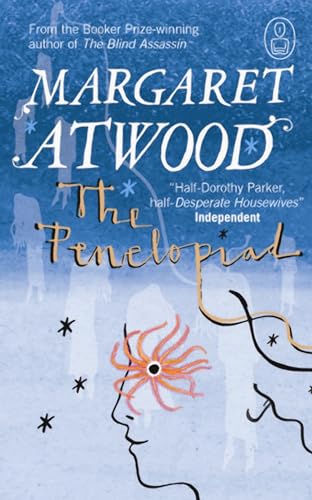
The Odyssey is a long epic poem about gods and warriors and the ultimate Trophy Wife. In the Penelopiad, Margaret Atwood spins this tale on its head.
The Penelopiad is a very slim volume- not even reaching 200 pages, with very wide margins. The Trojan War takes up only two pages of the book. And yet, Atwood's simple phrases get the job done.
We see Penelope as a real person, not as the flatly-characterized, devoted wife millennia of storytellers have given us. She has a wry sense of humour, she is self-deprecatory, she is clever, she has a difficult son and an unfaithful husband. And she makes a great effort to do the best she can in the twenty years her husband is away.
We get her perspective from Hades, as she walks through death, meeting people such as her cousin Helen (presented brilliantly as a stuck-up young woman obsessed with her own beauty). She gives great commentary about modern life by telling us she sometimes shows up at seances to learn about life today, and wonders why people are so obsessed with this "Marilyn" woman.
But the most moving parts of the story, in my opinion, is in the chorus of the twelve hanged maids, and in the ways they attempt - by way of a 21st century court, and a college lecture - to be granted justice for what was done to them by Odysseus and Telemachus, and in the haunting way they choose to go after Odysseus, after death.
With The Penelopiad, Atwood brings to life the other side of The Odyssey- that of the many women left behind to tend hearth and home. She revitalizes the character of Penelope, making her a solid, practical woman who loves her husband, even though she might not think he deserves it. For such a slim volume, The Penelopiad packs a punch. Highly recommended.
The Odyssey is a long epic poem about gods and warriors and the ultimate Trophy Wife. In the Penelopiad, Margaret Atwood spins this tale on its head.
The Penelopiad is a very slim volume- not even reaching 200 pages, with very wide margins. The Trojan War takes up only two pages of the book. And yet, Atwood's simple phrases get the job done.
We see Penelope as a real person, not as the flatly-characterized, devoted wife millennia of storytellers have given us. She has a wry sense of humour, she is self-deprecatory, she is clever, she has a difficult son and an unfaithful husband. And she makes a great effort to do the best she can in the twenty years her husband is away.
We get her perspective from Hades, as she walks through death, meeting people such as her cousin Helen (presented brilliantly as a stuck-up young woman obsessed with her own beauty). She gives great commentary about modern life by telling us she sometimes shows up at seances to learn about life today, and wonders why people are so obsessed with this "Marilyn" woman.
But the most moving parts of the story, in my opinion, is in the chorus of the twelve hanged maids, and in the ways they attempt - by way of a 21st century court, and a college lecture - to be granted justice for what was done to them by Odysseus and Telemachus, and in the haunting way they choose to go after Odysseus, after death.
With The Penelopiad, Atwood brings to life the other side of The Odyssey- that of the many women left behind to tend hearth and home. She revitalizes the character of Penelope, making her a solid, practical woman who loves her husband, even though she might not think he deserves it. For such a slim volume, The Penelopiad packs a punch. Highly recommended.

![[community profile]](https://www.dreamwidth.org/img/silk/identity/community.png)
no subject
Date: 2018-12-31 06:46 am (UTC)