![[personal profile]](https://www.dreamwidth.org/img/silk/identity/user.png) jazzy_dave
jazzy_daveKevin Barry "The Heart In Winter" (Canongate)
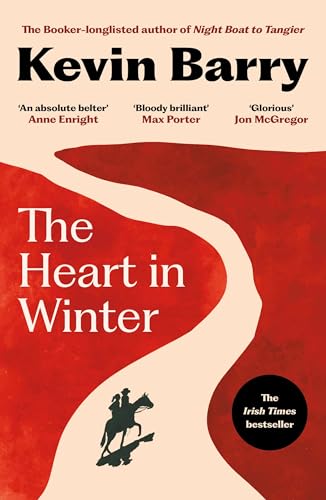
Might seem an appropiate book to read this time of the year.
A quick summary of what this novel is about barely touches the surface. It is ostensibly the story of an Irish immigrant to the United States, come by ship to Butte, Montana, in 1891 with thousands of his fellows from a starved-out country. Also like thousands of other Irish, the promised land does not show him much promise. Most scratch out a living in the area copper mines. Recreation consists of binge drinking and fighting. Life is brutish.
Tom Rourke seems to rush headlong into the troubles that await him: poverty, alcohol, drugs, skimpy wages blown on prostitutes, opiates and card games. Often numbed by his favoured substances, he stumbles toward survival by using his skill with a pen to write matchmaking letters for other lonely and desperate men. He has no particular dream in that regard. Until he meets Polly Gillespie, the new mail-order bride of a local mine owner, leagues above him in status and wealth. They know immediately. They rob a boarding house safe and flee to San Francisco on a stolen horse, pursued by three hired hit men to avenge the duped husband.
In its bare outlines, then, this is a familiar story. New land, new life, new love, impediments to happiness, lawlessness, danger, and high stakes everywhere. But this story becomes something different in the hands of Kevin Barry, who is no ordinary writer. His earlier publications have received international acclaim and prestigious writing awards in his native Ireland. He captures the fine details of historical fiction, especially as seen through the eyes of an outsider, but the language here is more poetic than novelistic. There are turns of phrase, images and modes of speech, and humour both subtle and outrageous, so striking that you will want to write them immediately down to savour. Most important, for all its Wild West setting, and its boy-girl romance, this novel bursts through the usual confines of the immigration story and the frontier love story that it might, at first, appear to be. It becomes something of a meditation on the price of love, and the meaning of survival, and the relationship between what is beautiful and what is not.
Might seem an appropiate book to read this time of the year.
A quick summary of what this novel is about barely touches the surface. It is ostensibly the story of an Irish immigrant to the United States, come by ship to Butte, Montana, in 1891 with thousands of his fellows from a starved-out country. Also like thousands of other Irish, the promised land does not show him much promise. Most scratch out a living in the area copper mines. Recreation consists of binge drinking and fighting. Life is brutish.
Tom Rourke seems to rush headlong into the troubles that await him: poverty, alcohol, drugs, skimpy wages blown on prostitutes, opiates and card games. Often numbed by his favoured substances, he stumbles toward survival by using his skill with a pen to write matchmaking letters for other lonely and desperate men. He has no particular dream in that regard. Until he meets Polly Gillespie, the new mail-order bride of a local mine owner, leagues above him in status and wealth. They know immediately. They rob a boarding house safe and flee to San Francisco on a stolen horse, pursued by three hired hit men to avenge the duped husband.
In its bare outlines, then, this is a familiar story. New land, new life, new love, impediments to happiness, lawlessness, danger, and high stakes everywhere. But this story becomes something different in the hands of Kevin Barry, who is no ordinary writer. His earlier publications have received international acclaim and prestigious writing awards in his native Ireland. He captures the fine details of historical fiction, especially as seen through the eyes of an outsider, but the language here is more poetic than novelistic. There are turns of phrase, images and modes of speech, and humour both subtle and outrageous, so striking that you will want to write them immediately down to savour. Most important, for all its Wild West setting, and its boy-girl romance, this novel bursts through the usual confines of the immigration story and the frontier love story that it might, at first, appear to be. It becomes something of a meditation on the price of love, and the meaning of survival, and the relationship between what is beautiful and what is not.
![[community profile]](https://www.dreamwidth.org/img/silk/identity/community.png)