Book 1 - Rie Qudan "Sympathy Tower Tokyo"
Jan. 4th, 2026 09:44 pm![[personal profile]](https://www.dreamwidth.org/img/silk/identity/user.png) jazzy_dave
jazzy_daveRie Qudan "Sympathy Tower Tokyo" (Penguin)
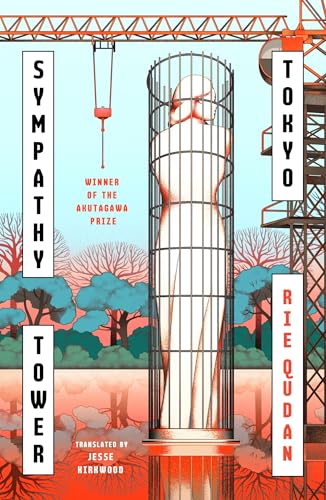
Sympathy Tower Tokyo is a thought-provoking novel that begins with the presence of generative AI, but quickly reveals it’s not really about machines. It’s about people. While it may seem at first like Qudan is simply exploring the novelty of AI-generated language, the real power of the novel lies in how that technology becomes a lens for deeper questions. When a machine offers us words, does that reduce their emotional impact, or is it just another form of collaboration?
At its core, Sympathy Tower Tokyo is a meditation on the changing nature of language. In the neon-lit glow of Tokyo, languages blend as Japanese and foreign sounding imports mix in subways, menus, ideals, and inner thoughts. Generative AI, able to mimic tone and idioms, highlights how flexible language has become. But the novel goes beyond this. Language here isn’t just a tool. It’s a living thing, shaped by context, gesture, even silence. The AI’s fluent but mechanical voice contrasts with the messiness of human expression, showing that meaning comes not just from grammar but from emotion, memory, and history.
Although the story presents itself as forward-looking with themes of AI, emotional design, and restorative justice, it’s also shot through with more conservative undercurrents that complicate its message. These aren’t overt, but they surface in character dynamics, language choices, and ideological tensions.
The architect of the tower is a particularly complex figure. She’s a woman leading a radical project meant to reimagine criminal justice. Yet her thinking is steeped in cultural nostalgia and linguistic conservatism. Her dislike for katakana, for example, goes beyond aesthetics. It reflects discomfort with Japan’s shifting cultural identity. To her, katakana signals dilution, euphemism, even avoidance. Her preference for kanji isn’t just about beauty. It’s about control and preserving meaning within a fixed cultural tradition. This linguistic purism mirrors a broader conservative instinct, a desire to maintain clarity, hierarchy, and cultural specificity in an increasingly fluid world.
The novel’s central irony is that its most innovative elements, the tower, the AI, the justice model, are all created by people who hold deeply traditional views. This tension feels deliberate. Qudan seems to suggest that real progress often stands on the shoulders of older, sometimes problematic foundations. Even the most forward-thinking ideas can carry traces of the past. The result is a story that embraces empathy, technology, and change while cautioning us to examine the ideologies quietly embedded in them. The tower may rise high, but it’s still grounded in history, bias, and contradiction.
In the end, Sympathy Tower Tokyo isn’t really a story about AI, architecture, or even justice. It’s a story about language, how it shifts, how it connects, and how it fails to define. Through its layered narrative and philosophical depth, Qudan invites us to examine language and its cultural underpinnings more closely. I loved it.
Sympathy Tower Tokyo is a thought-provoking novel that begins with the presence of generative AI, but quickly reveals it’s not really about machines. It’s about people. While it may seem at first like Qudan is simply exploring the novelty of AI-generated language, the real power of the novel lies in how that technology becomes a lens for deeper questions. When a machine offers us words, does that reduce their emotional impact, or is it just another form of collaboration?
At its core, Sympathy Tower Tokyo is a meditation on the changing nature of language. In the neon-lit glow of Tokyo, languages blend as Japanese and foreign sounding imports mix in subways, menus, ideals, and inner thoughts. Generative AI, able to mimic tone and idioms, highlights how flexible language has become. But the novel goes beyond this. Language here isn’t just a tool. It’s a living thing, shaped by context, gesture, even silence. The AI’s fluent but mechanical voice contrasts with the messiness of human expression, showing that meaning comes not just from grammar but from emotion, memory, and history.
Although the story presents itself as forward-looking with themes of AI, emotional design, and restorative justice, it’s also shot through with more conservative undercurrents that complicate its message. These aren’t overt, but they surface in character dynamics, language choices, and ideological tensions.
The architect of the tower is a particularly complex figure. She’s a woman leading a radical project meant to reimagine criminal justice. Yet her thinking is steeped in cultural nostalgia and linguistic conservatism. Her dislike for katakana, for example, goes beyond aesthetics. It reflects discomfort with Japan’s shifting cultural identity. To her, katakana signals dilution, euphemism, even avoidance. Her preference for kanji isn’t just about beauty. It’s about control and preserving meaning within a fixed cultural tradition. This linguistic purism mirrors a broader conservative instinct, a desire to maintain clarity, hierarchy, and cultural specificity in an increasingly fluid world.
The novel’s central irony is that its most innovative elements, the tower, the AI, the justice model, are all created by people who hold deeply traditional views. This tension feels deliberate. Qudan seems to suggest that real progress often stands on the shoulders of older, sometimes problematic foundations. Even the most forward-thinking ideas can carry traces of the past. The result is a story that embraces empathy, technology, and change while cautioning us to examine the ideologies quietly embedded in them. The tower may rise high, but it’s still grounded in history, bias, and contradiction.
In the end, Sympathy Tower Tokyo isn’t really a story about AI, architecture, or even justice. It’s a story about language, how it shifts, how it connects, and how it fails to define. Through its layered narrative and philosophical depth, Qudan invites us to examine language and its cultural underpinnings more closely. I loved it.
![[community profile]](https://www.dreamwidth.org/img/silk/identity/community.png)